
Leadership Advisor · Organizational Researcher · Author
The best advice comes from someone who has been where you are.
Dr. Sims has spent fifteen years working inside federal organizations, not advising from the outside but living the complexity. Her work with you is grounded in research and tested in the field.
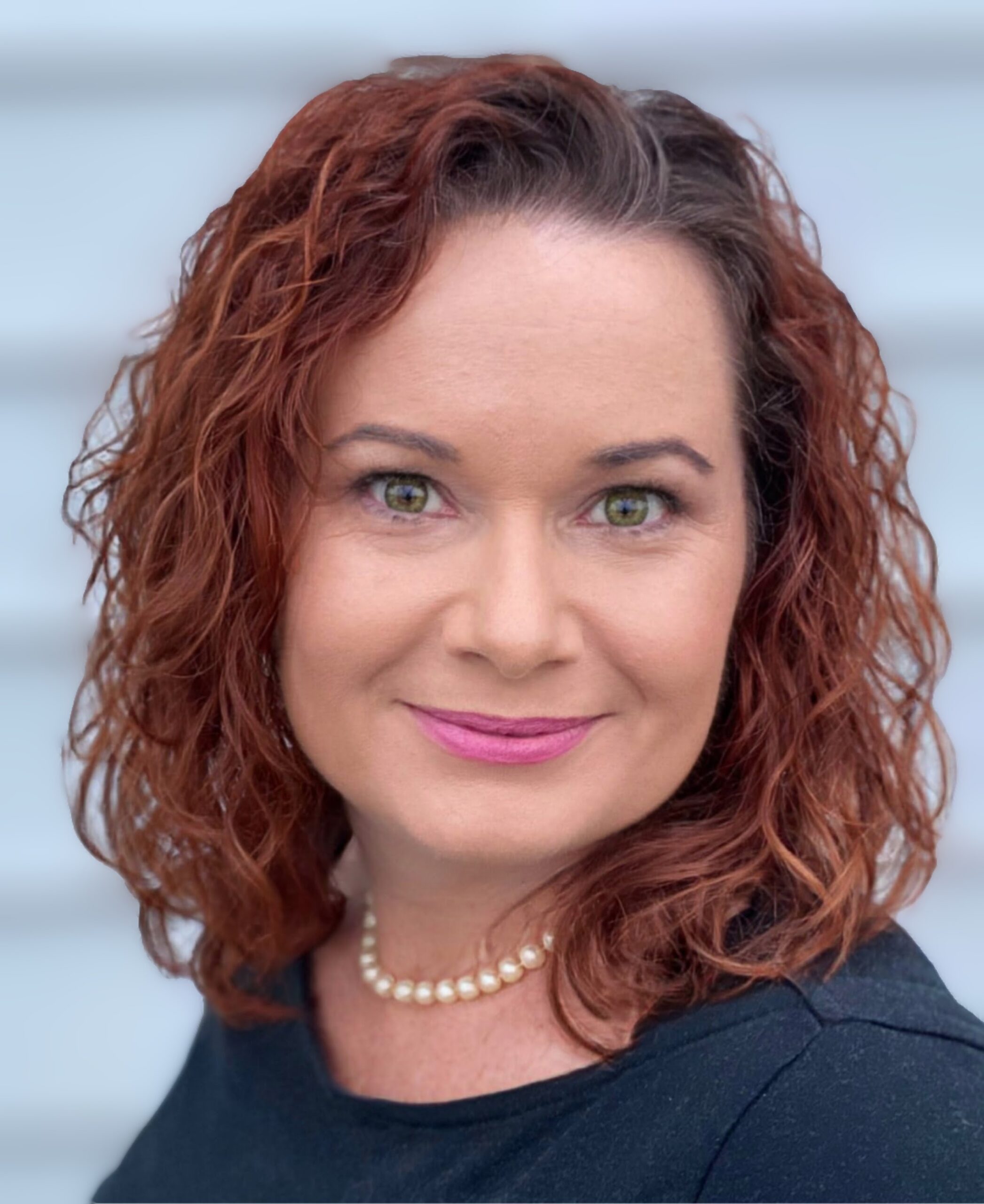
About Dr. Dana E. Sims
Most organizational problems look straightforward until you’re inside them. Dr. Dana E. Sims has spent more than 15 years working from the inside, where the complexity is real, the history matters, and the easy answers rarely are.
The foundation for her career began with her doctorate in Industrial-Organizational Psychology from the University of Central Florida, where she examined interorganizational trust and psychological safety’s impact on whether people in organizations feel safe enough to do the right thing when it counts. Trust and psychological safety have been the intellectual cornerstones of her work ever since.
She believes trust and psychological safety are not abstract concepts but operational conditions that determine whether organizations can learn, change, and perform. That research grounding is what separates diagnosis from opinion in everything she does. Her peer-reviewed research, book chapters, and industry publications, including work published alongside some of the most cited scholars in organizational psychology, and her regular presence at national conferences mark Dr. Sims as a recognized thought leader in her field.
The Work
Dr. Sims did not plan to spend her career in federal organizations. She stumbled in after the 2008 economic crash ended her first consulting job, where she had worked with Fortune 500 companies on leadership and employee performance. When the firm closed, she landed in federal service and stayed.
She stayed because the work matters. Government organizations exist to serve the American public. The people who show up every day to do that work deserve better than accumulated dysfunction and the weight of how things have always been done.
She was intentional about every role she took, building specific capabilities along the way. From instructional design at the Department of the Navy, to leadership program development at ASPR and HRSA, where she learned early that you cannot meaningfully separate leadership development from organizational health. Then she made a deliberate move that surprised people. She left the comfort of work she knew well and joined the CIO shop at USPTO, a technology-driven environment where being a psychologist was not an automatic advantage. She learned a new domain, earned credibility on different terms, and came out with a capability set most organizational psychologists never develop.
The Sea-bbatical
In 2018 Dr. Sims made a decision that very few people in stable federal careers make. She left.
Not for another position. Not for a better opportunity. She left because years of giving more to her work than it gave back had taken their toll. Burnout has a way of forcing clarity. What she needed was a way to find her way back to herself.
She learned to sail. Then, she and her partner sold most of what they owned, bought a 41-foot sailboat, and moved aboard with their sheltie and their cat. They have lived aboard ever since. During her sea-bbatical, they sailed the Chesapeake, the Bahamas, the Dry Tortugas, and up the eastern seaboard as far as Bar Harbor, Maine. The sheltie loved every beach they found. The cat, who passed away a few years ago, was a sailor to the end.
But her sea-bbatical was not all sunsets and umbrella drinks. She quickly learned that sailing is ninety percent boredom punctuated by ten percent sheer terror. There were storms she was not sure they would survive including an electrical storm miles offshore. And then there was Hurricane Dorian while in the Abacos, Bahamas. They took the last available weather window back to the United States and the storm tracked north. They were lucky. Many of those who stayed were not. She is honest that the decisions that got them out involved bad judgment, ignored advice, and no small amount of luck. She wrote about what that experience taught her about leadership, and you can read the full account through her LinkedIn article: Outrunning a Cat 5 Hurricane: Leadership lessons from my scariest days at sea.
What the sea-bbatical gave her was perspective that no amount of seniority inside an institution could produce. When the decisions are real and the consequences immediate, organizational problems look different. Not unimportant, but rarely life and death, even when they feel that way. She also learned, in conditions where it was not optional, what trust, communication, and shared decision making look like in practice.
She came back ready to do the work differently.
The Return
Returning to federal service meant returning at scale. At the Defense Counterintelligence and Security Agency (DCSA), Dr. Sims led a $10M+ portfolio, a 14-person distributed team, and a research-backed leadership ecosystem redesign for an organization of more than 6,000 employees. Her mixed-method Leadership Insights study informed a 13-program redesign and was presented at the Association for Talent Development’s International Conference. She built a coaching culture and launched evaluation frameworks connecting program outcomes to agency goals.
Most recently she served in a senior learning strategy and operations role at the Department of Transportation Office of Inspector General (DOT OIG), taking on acting Chief Learning Officer responsibilities during a period of significant organizational change.
Fedability: The Origin Story
Fedability did not start as a business plan. It started during a pandemic.
In 2020, while still living aboard and watching federal organizations scramble to respond to a crisis none of them had prepared for, Dr. Sims began consulting independently. Agencies that had resisted remote work for years suddenly had no choice. Leaders who had never managed at a distance were struggling. Organizations were making decisions about the future of work without the data or the frameworks to make them well.
She spent that period doing what she does best: understanding what was happening, separating the real problems from the manufactured ones, and helping organizations and their leaders navigate change they had not chosen and were not ready for.
What that work made clear is that the most valuable thing she could offer was not a program or a framework. It was the combination of inside knowledge, research rigor, and hard-won perspective that no firm could replicate and no standard methodology could package.
Fedability is now a fully independent practice, grounded in research, built from the inside out, and designed for the organizations and leaders who are ready to look honestly at what is happening and do something about it.
The Storms of Leadership
The Book
Dr. Sims is writing The Storms of Leadership, a book about what leading in complex organizations demands, told honestly, for the leaders who already know the textbook version is not the whole story.
The title is not accidental. The storms she navigated on the water were real. So are the ones her clients face every day in organizations that are more complex, more political, and more resistant to change than anyone in a leadership seminar will admit.
It is not finished yet. When it is, it will be worth the wait.
Ready when you are
If any of this resonates, if you are leading an organization through something that has not responded to the usual answers, or navigating a moment in your own leadership that you would rather not face alone, Dr. Sims would like to talk.
Not to sell you something. To have an honest conversation about what is going on and whether she is the right person to help.
Education
PhD & MS, Industrial-Organizational Psychology
University of Central Florida
BA, Psychology
University of South Florida
Certifications
SHRM-SCP · Situational Leadership · People Analytics · ROI Measurement
Selected Publications
Burke, C.S., Sims, D.E., et al. Trust in leadership: A multi-level review. Leadership Quarterly, Finalist, Best Paper, Center for Creative Leadership
Sims, D. & Mahon, C.R. (2025). Leadership in High-Performance Organizations and Organizational Change Management. In C.R. Mahon & C.A. Rentas (Eds.), Management and Leadership in the Clinical Laboratory. Elsevier.
Selected Speaking
Sims, D. & Charles, R.L. (2025). Next-Gen Leaders: A Holistic Blueprint for Modernizing Government Leadership Development. Presented at ATD25, ATD International Conference & Exposition, Washington, DC.
Association for Talent Development International Conference, multiple appearances